
Billings
The missing Diana chapter

The fun of serialising a novel on Substack is you readers are actively involved in the process. A beta reader from Substack (thank you, you know who you are!), suggested I explore Diana’s character more, so I wrote this chapter.
________
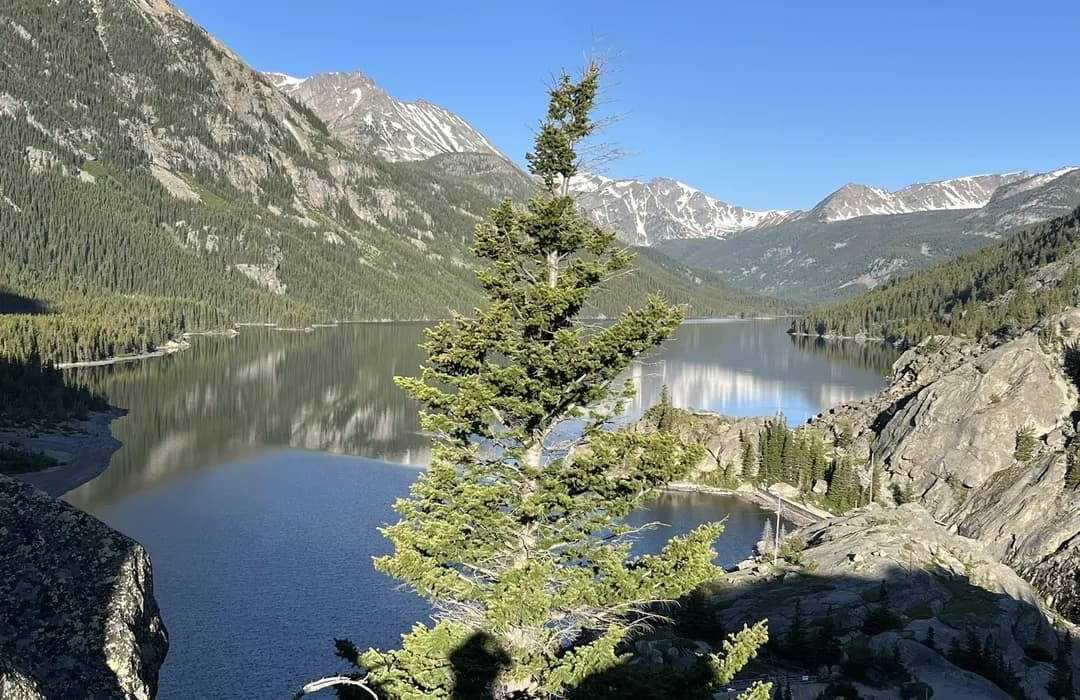
The angle of repose: the steepest angle at which a sloping surface of loose material remains stable.
The Beartooth maps came out of the drawer every November and went back into it every December, and they were on the kitchen island again now, the 1:24,000 quads with the route inked in pencil from Mystic Lake up over the plateau to the ridge above Granite Peak, and beside them the laptop stood open to the forecast sheet, because Oracle’s second quarter died on the last day of November and the month was therefore a corridor. Diana stood at the island with two fingers of bourbon and moved the Conrad elevator group from November to January, which was when it would sign, and watched the cell recalculate, and the number it produced was a number she could defend in her sleep. In the browser there was a tab with a gear list she had typed in 2019. Six days, September, food for seven. She read it through once, the way you read a letter you wrote to yourself and never sent. Then she closed the tab and folded the maps along their old creases and put them away.
The text came at nine-forty.
It is over.
Three words and the number was his. She had told him in October to come and see her when it was over, on the phone, late, with the television going, and she had meant it the way you mean the things you say at that hour, completely and without logistics. She looked at the three words for a moment. Then she typed two and sent them and set the phone face down on the granite.
Then come.
The phone stayed dark. She had not expected otherwise. A man walks for a while first, then seeks repose. She knew that much about the species, and more than that much about the man.
There was a trout in the refrigerator from Sunday on the Bighorn. She cooked it in butter with the radio low and ate at the table with a cloth napkin and the good glass, because people who live alone divide into the ones who stop setting a place and the ones who refuse to, and she had decided which she was a long time ago, in this kitchen, on purpose. The book he had left in October was still on the nightstand in the spare room, a Penguin Turgenev, A Sportsman’s Sketches, squared to the lamp at an angle of casual abandonment that she now understood he could produce on demand. Hunting stories for the woman who hunts. He would have considered it subtle. In October he had sat on the back step reading in shirtsleeves while the cold came down off the rims, gone from the yard entirely, and she had watched him through the window over the sink for longer than the dishes took. She had not moved the book and she had not read it. She turned off the kitchen light and went to bed and slept the way she always slept, which was well.
Keller ran the Friday forecast from Denver with the blinds up and the Front Range behind him doing work his slides could not. Diana gave her commit in four lines and her best case in three and used no adjectives. When Keller asked whether Conrad could be pulled into November she said no. When he asked what it would take to pull it in she said January. There was a silence with arithmetic in it, and behind her number sat eighteen years of Januaries that had signed, and Keller could count, and the call moved on to Boise.
Boise had bad news in it. They had let Hal Vance go on Wednesday, nineteen years, the territory folded into Salt Lake, and the call observed four seconds of procedural sympathy and continued, because the call was a liturgy, and weather does not stop one. At nine-thirty she sent Hal the mobile number of a man she knew at an ag-software outfit in Spokane and one line, he’s expecting you, and nothing else, because there is nothing you can say to a man in his first week that he can use.
At eleven Lyle Briggs called from south of Roundup with three hundred head going onto trucks and a scale head that had eaten its own firmware. She talked him through the rollback from the kitchen island, the menus from memory, eating a sandwich standing up, and the whole thing took nine minutes. “You answer your phone,” Lyle said, in the voice of a man reporting a miracle, and she said the scale company’s hold music was the actual miracle, and he laughed and went back to his cattle. There was no field in the system for any of it, and she wrote nothing down.
She closed the laptop at five. The closing was not an event. It was a habit with a history. She packed the rifle and the kill kit and the sleeping bag that turned the back of the Subaru into a berth, set the coffee for four, and took the Turgenev off the nightstand on her way through the hall.
She was through Columbus before five and up the West Fork road at first light, Lucinda Williams as far as the pavement lasted and after that the heater and the gravel. At the trailhead she drank coffee on the tailgate while the sky came up grey over the Beartooth front, and the cold was the kind that organises a person. The phone went into the glovebox. She knew what a phone does to someone who watches it. The knowing had cost her a winter once, and the debt was paid in full, and the glovebox clicked shut on the only thing in the car that wanted something from her.
She hunted the morning up the drainage and glassed the parks at midday and saw a moose being enormous in the willows and nothing else, and hunted the evening down and saw nothing at all, and none of it was failure. The day had elk in it somewhere and her legs in it certainly, and an hour on a warm rock at the edge of the timber where the country opened above her and went up and kept going: the last stunted spruce thinning out into nothing, then the long grey talus, then the granite itself, bare and broken and older than any argument, holding the snow in its north-facing seams in lines so clean they looked surveyed. The peaks stood in a row along the top of everything with the wind smoking off their ridges in white banners that meant it was thirty below up there and blowing, and down here it was still, and she ate salami and crackers with her back against the rest of the continent and watched the high country do the one thing it does, which is not care. There are days the country gives you the animal and days it gives you the country.
She slept in the back of the car with the seats down and read the Turgenev by headlamp until the cold got into her hands. A count’s man walking the birch woods with a dog and an opinion, serfs and snipe and the long Russian evening lasting forty pages. It was good. It annoyed her that it was good, which was the trouble with the man in general. Eighteen years of salesmen had passed through her territory like weather systems, the golfers, the deck-talkers, the boys running their fathers’ scripts, and she could read every one of them in the time it took to shake hands. Then a man in a suit the colour of paprika had asked her about calf-tagging at a hotel bar in Indianapolis and listened to the answer like it was technical literature, and her instruments had returned nothing. Not a kind. Not a category. The nothing had been restful, the first quiet of its sort in years.
What he had done in October was cook in her kitchen without asking where anything was. He had found the olive oil and the garlic and the cast iron by opening three drawers and one cabinet, and she watched him do it with the irritation of a woman whose kitchen has an order that is not negotiable, and under the irritation, the pleasure of watching a man move through her space as if the space made sense to him. He had made a daube with the elk sausage and a tin of San Marzano from the back of the pantry and the heel of a bottle of red and a bay leaf off the dried bunch by the window and a parmesan rind she had been saving for a soup she never made, the thing the Legion cooks in Aubagne had made on Sundays with whatever the kitchen held. It filled the house with a smell that was not a Billings smell, and it was better than what she would have made with the same ingredients. She did not tell him this. He had dried the dishes badly and put two of them back in the wrong cabinet and she moved them after he left. He asked her real questions about feedlot software and turned the answers over like he was learning a trade. He had sat on the back step reading in shirtsleeves while the cold came down off the rims, gone from the yard entirely, and she had watched him through the window over the sink for longer than the dishes took. On the second night they had argued about the syrah. She said it was good. He said it was correct, which was not the same thing, and explained the difference for longer than the difference warranted, and she laughed, and the laugh surprised her, because she could not remember the last time a man had made her laugh by being wrong about wine with that much conviction. He had wanted her in a way that had nothing absent-minded in it, and then gone back out onto the road that was eating him, because the road was what he had instead of a self. She marked her place with a fuel receipt and lay listening to the creek, which ran the way it had run before anyone had a quota and would run long after.
The cow came down out of the timber at first light with two others and stood broadside at a hundred and eighty yards on the slope above the two-track, on ground that fell toward the car, which is the only shot a woman alone in late November has any business taking. Diana watched her through the scope for the better part of a minute, not from doubt but because the frost was smoking off the sage in small ribbons and there was no reason on earth to hurry. Then she fired. The cow went thirty yards and folded. The other two ran a hundred, stopped, looked back the way they do, and went on over the saddle.
She worked the bolt and made the rifle safe and sat in the sage while the sun came.
The work took the morning, and it was work she knew down in the wrists: dressed where the cow lay, broken into quarters, bagged, carried to the car in two trips, downhill, the loads heavy and honest on the frame. By noon the back of the Subaru held most of a year’s meat and her hands had stopped being cold from the inside. She washed her forearms in the creek and changed her shirt and ate the last of the salami leaning on the fender while two ravens arrived to supervise what she had left them, and she wished them joy of it.
The phone buzzed once in the glovebox on the switchbacks where the service finds you. She did not pull over. She read it forty minutes later at the gas station in Columbus, beside a corn dog roller that had been turning since the Clinton administration, with diesel in the air and her hands smelling of sage and iron.
Tuesday. DL 3855, arrives 4:38 PM. If the offer still stands.
If the offer stands. As if she dealt in offers that expired. She bought coffee and a bag of sunflower seeds and typed one word in the parking lot and sent it.
Good.
At the house she hung the quarters in the garage to cool and showered the mountain off and cleaned the rifle at the kitchen table on an old towel, bolt out, rod and patches, her hands going about the small ordinary offices of it. The job held rights to her the way the ditch companies hold rights to the Stillwater. Senior rights, decreed, specific to the inch and to the season, and she honoured them in full and on time, every year, because short-changing the thing you do all day turns a person sour from the inside out, and she had met the soured. But the decree did not name September. It did not name the first hour of the morning, or this table, or her face when the laptop closed. In eighteen years it had never once named the headwaters.
She put the rifle in the safe. Then she opened the laptop, which on a Sunday night was a different country, and went into the calendar and blocked the first six days of September and typed OUT in the subject line, no note. The calendar asked whether she wanted to decline conflicting meetings and she said yes to all of them, the scheduled and the not yet imagined alike. The week sat there in the grid, solid and unexplained. Thirteen years she had been promising that ridge to herself. She looked at the block until the screen dimmed, and went to bed.
Monday a grain man in Huntley gave her number to a feedlot operator out of Hardin named Wade Thornquist, who called at eight-forty and talked for nine minutes about scale systems that did not speak to each other and two software quotes he had already walked away from, and she liked him by the third minute and had the discovery on the calendar for the following Tuesday by the tenth.
She took the trash out at noon and Doris Kowalski was at the fence with the dog, and they talked about the snow coming Wednesday and about the inflatable turkey the Hardys had moored to their lawn like a small unserious airship, and Doris asked whether she had plans for the holiday, and Diana said she had company coming, and Doris’s eyebrows performed a brief ceremony, and the dog looked from one woman to the other as if keeping score.
In the afternoon she made up the spare room. Fresh sheets on the queen, the Pendleton folded in thirds across the foot, the low shelf dusted and the spines squared, the Stegner, the Maclean, the Robinson, the Haruf, the O’Brien, the Oliver. She took one book down off that shelf and carried it to her own room and put it in the drawer of the nightstand and did not examine the reasons. The Turgenev went back beside the lamp at his angle, more or less. Let him find it looking forgotten. The room was ready in twenty minutes. It had been ready, in the ways that counted, since October. She knew what the first month out does to men built the way he was built. She had run those numbers too, and made the bed anyway.
She bought bread and eggs in town and nothing else, because Thursday she would shop properly.
Tuesday she worked the morning, two calls and the Conrad paperwork, and stopped at noon, the stopping cost her nothing she would miss. She dressed in clean jeans and the good fleece and the Filson vest, and at the last minute she took the silver cuff out of the dish by the kitchen sink, the heavy one, Zuni work, the one thing she had asked to be sent on from the house in Miles City when the house was emptied. She did not wear it often. She put it on the way you put on something that a person you are still attached to was also attached to, and turned her wrist once under the kitchen light, and got her coat.
The airport road climbs the rims. The Rimrocks held the last of the sun the way brick holds an afternoon, and the valley below was going to lights, the refinery plume standing up straight in the cold and then thinking better of it. She parked in the cell lot with the engine running and the heater on and her hands at ten and two, which a parked car does not require.
The Delta regional came over the rims at four-thirty-one with its landing lights on, small against the sandstone, dropping out of a sky already going to stars at its eastern edge. She watched it the whole way down.
Then she put the car into gear.
the guy won’t stop!!!